
Scaling AI Across Multilingual Content: The Biggest Mistake Organizations Make
 Ciklopea
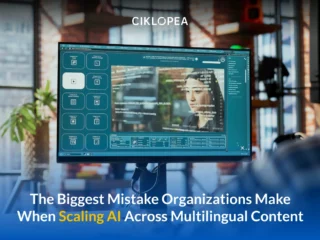
Organizations often ask how much multilingual content AI can handle. The more important question is whether every piece of content should be handled in the same way.
 AI-Powered Translation Services
By combining artificial intelligence with human linguistic expertise, Ciklopea’s AI translation services for professionals offer a smarter, faster, and scalable approach to multilingual communication.
Whether you're localizing user-generated content, updating legal documentation or launching products globally, our AI-driven language solutions keep your business moving at the speed of your audience.
 Engineered for Trust, Powered by Intelligence
What sets Ciklopea’s AI translation solution apart is what’s under the hood. Unlike generative AI tools, our proprietary translation engine is built in-house, trained on high-quality, structured bilingual data collected over two decades of hands-on linguistic experience. This means:
It’s not just artificial intelligence - it’s Ciklopea intelligence.
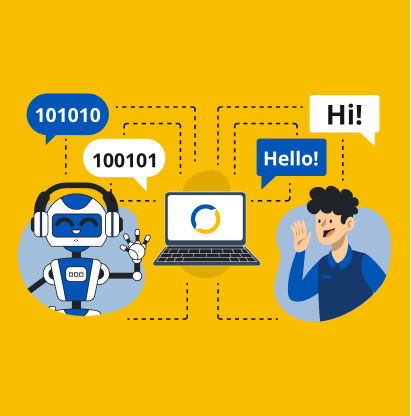 Speed and Quality: The Best of Both Worlds
Ciklopea's AI translation services for professionals are designed for organizations that need fast turnaround without compromising on accuracy and consistency. Our value lies in:
This hybrid approach ensures the output meets the expectations of global users without delays or guesswork.
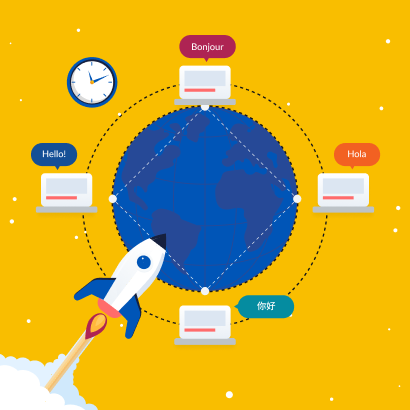 Built for Fast-Moving Businesses
If you're in e-commerce, automotive, travel, legal, or technology, you know that time-to-market and content freshness are critical. Our AI translation solutions enable your teams to:
From marketing content to technical documentation, we deliver fast, cost-effective results tailored to your industry - without compromising translation quality.
Organizations often ask how much multilingual content AI can handle. The more important question is whether every piece of content should be handled in the same way.
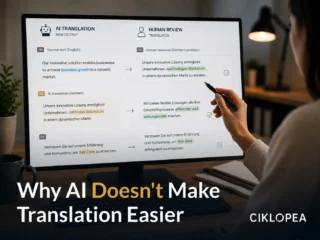
Artificial intelligence has dramatically reduced the effort required to create multilingual content. Organizations can now translate, adapt and generate content at a speed that would have been difficult to imagine only a few years ago. But greater production capacity does not automatically lead to better multilingual communication because it has also introduced an entirely new management challenge that most organizations have yet to recognize.

In today’s interconnected economy, the difference between companies that thrive globally and those that struggle often comes down to one critical factor: how they approach language strategy and localization planning. While many organizations still rely on intuition or outdated market assumptions, forward-thinking companies are embracing a fundamentally different approach—one powered by data, precision, and strategic insight.